Capsule reviews for May 29
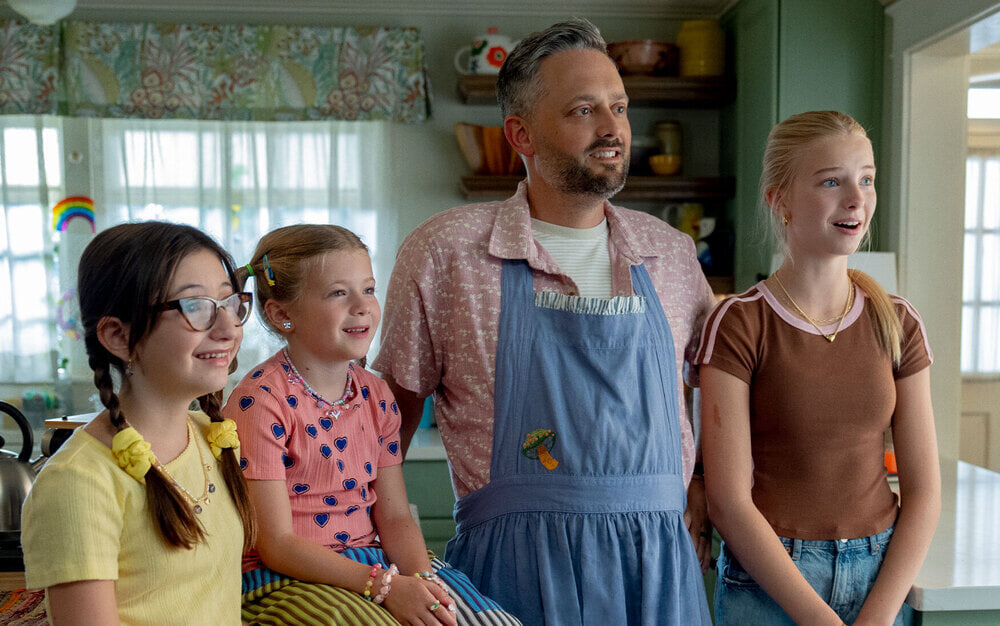
Birdie Borria, Charlotte Ann Tucker, Nate Bargatze, and Stella Grace Fitzgerald star in THE BREADWINNER. (Photo: TriStar Pictures)
An Autumn Summer
With an emphasis on setting and mood over plot, this coming-of-age romantic drama is rich in timeless emotional specificity yet struggles to translate its bittersweet nostalgia into a more compelling story. It’s set in beautiful northern Michigan, where a high-school grad (Mark McKenna) spends a final carefree summer at a lake house with his girlfriend (Lukita Maxwell) and two buddies (Jun Yu, Julian Bass) before they go their separate ways to college. The screenplay by rookie director Jared Isaac is heartfelt and sincere as it sidesteps melodrama and contrived teenage angst, although the narrative momentum falters as the conflicts remain internalized. It’s pleasant but forgettable. (Not rated, 98 minutes).
The Breadwinner
Nate Bargatze’s comic talents don’t translate from stage to screen in this wholesome parenting saga that strains to pair the self-deprecating absurdity of his stand-up material with a contemporary Mr. Mom narrative. Bargatze plays a successful Nashville car salesman whose wife (Mandy Moore) stays at home with their three daughters. The arrangement works until she invents a trinket that scores on “Shark Tank” and must travel for two weeks to launch her company, leaving Nate to handle the daily routine. As disaster strikes and Nate learns lessons about sacrifice and responsibility, moviegoers are left to endure a corny parade of labored gags and obnoxious product placement. (Rated PG, 99 minutes).
The Currents
An atmospheric yet enigmatic probe of mental illness and artistic legacy, this introspective Argentinian drama refuses to chart an easy path to emotional catharsis, for moviegoers or its troubled protagonist. After a reckless impulse that almost ends in tragedy during a winter trip to Switzerland, famed fashion designer Lina (Isabel Aime Gonzalez Sola) becomes isolated and withdrawn. She returns home and distances herself from her family, including her perplexed husband (Esteban Bigliardi) while battling demons from her past. Complemented by stylish visuals and a deeply felt central performance, the uneven screenplay by director Milagros Mumenthaler is a cumulatively powerful glimpse into identity and vulnerability. (Not rated, 104 minutes).
The Last Viking
Sharp portrayals bring emotional grounding to this offbeat crime comedy from Danish director Anders Thomas Jensen (Riders of Justice), which strikes a winning balance between silly and sincere. It follows a bank robber (Nikolaj Lie Kaas) who is released after a lengthy prison sentence. His first priority is to reclaim the heist money, but it was buried by his brother (Mads Mikkelsen), who’s since become delusional and can’t recall where he hid the key. Although the deadpan quirks and over-the-top absurdism threaten to overwhelm the narrative momentum, the film finds its footing with an affectionate depiction of sibling bonds that embraces its wild tonal shifts. (Not rated, 116 minutes).
Propeller One-Way Night Coach
John Travolta lifelong passion for aviation resonates in every frame of this innocuous nostalgic trifle that dramatically never gets off the ground. It’s set in 1962, as commercial air travel became more of a reality for working-class families. Specifically, it’s told from the perspective of a precocious 8-year-old (Clark Shotwell) who experiences some “magical” adventures aboard a cross-country jetliner with his aspiring actress mother (Kelly Eviston-Quinnett) and some kind stewardesses. Travolta’s semiautobiographical screenplay, based on his own book, is heartfelt almost to fault, devoid of conflict while indulging his amber-hued childhood memories. It’s charming enough yet lacks the substance to reach its intended destination. (Not rated, 61 minutes).
Time and Water
It’s not necessarily a call to action, but this meditative documentary from director Sara Dosa (Fire of Love) is more of a prompt to ponder the more elegiac effects of climate change — specifically preserving memories and valuing what’s being left behind. The film is told from the perspective of acclaimed Icelandic poet Andri Magnason, who contrasts his own family history with the melting of glaciers in his homeland before his very eyes, finding parallels through folklore and grief. Visually striking throughout, the deliberately paced film is a haunting exploration of the relationship between humans and nature, even as it sometimes struggles to articulate a deeper meaning. (Rated PG, 93 minutes).