The Mummy
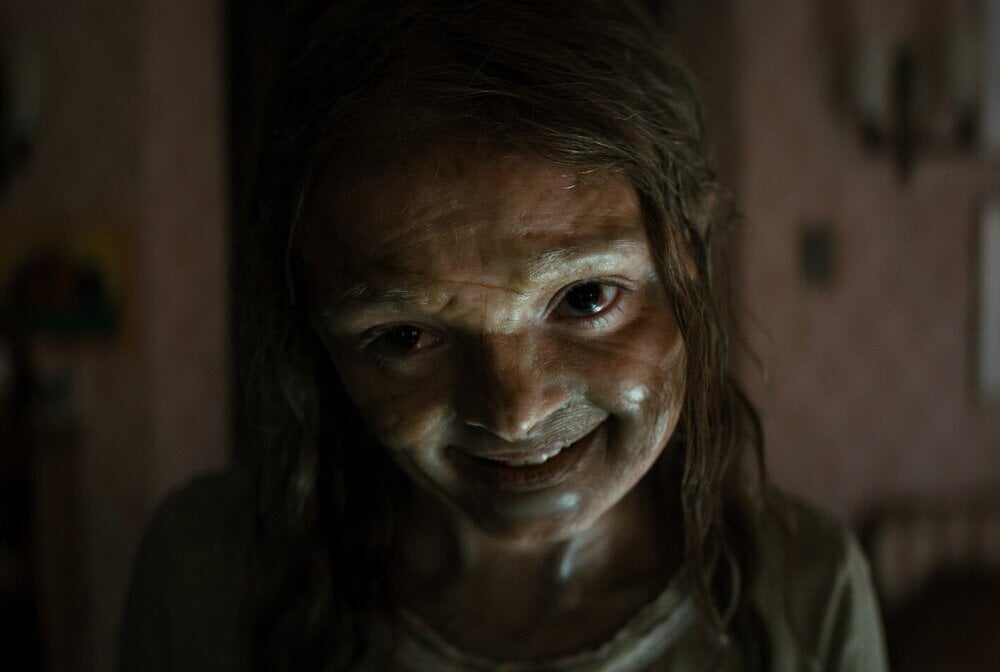
Natalie Grace stars in THE MUMMY. (Photo: Warner Bros.)
Another classic horror concept is dusted off and resurrected in The Mummy, which is more visually and narratively ambitious than it first appears.
This bloated and fetishistically bloody thriller from Irish director Lee Cronin (Evil Dead Rise) mixes throwback scare tactics and mythological tropes with a missing-persons mystery, yet struggles to translate its disturbing imagery into sustained tension or terror.
The story follows Charlie (Jack Reynor), a New Mexico journalist working abroad in Egypt, where he’s temporarily relocated with his family. When his 8-year-old daughter, Katie, disappears while playing in the garden, Charlie and his wife (Laia Costa) are understandably panicked as strangers in a strange land.
A brief investigation yields no clues. Flash forward eight years, and Katie (Natalie Grace) has been found, sort of alive, in the wreckage of a rural plane crash. She’s severely deformed, her behavior is erratic, and she’s unable to communicate, but the family heads back to Cairo to nurse her back to health — and hopefully, solve her apparent abduction.
Meanwhile, the parents and siblings are so desperately naive that they ignore every red flag. “I can’t live with not knowing what happened to her,” Charlie explains to a local detective (May Calamawy) who takes up the case.
It’s not long before Katie ruins the family reunion when she head-butts grandma, then scrounges around on all fours in the attic seeking live scorpions for a midnight snack.
Charlie realizes that Katie is being controlled by a sinister presence perhaps linked to ancient legends, and that returning to normal won’t be easy.
Cronin’s sharp craftsmanship makes the most of the film’s practical effects. However, while intensely and relentlessly amplifying the gore in the final act, his screenplay devolves into incoherent nonsense more reliant on formula than fresh ideas.
Uneven if consistently unsettling, the film tries to root its suspense in real-world paranoia and parental anxieties, but it’s driven by bad medical advice, eye-rolling twists, and a lack of common sense by people who struggle to earn our sympathy. Our rooting interest defaults to the afflicted teenager at odds with her internal tormenter.
If anything, the title is misleading because The Mummy is really more of a standard-issue demonic possession story that only tangentially digs into regional archaeology and cultural folklore. Other than for the most bloodthirsty genre aficionados, it deserves to stay buried.
Rated R, 133 minutes.