Capsule reviews for Nov. 6
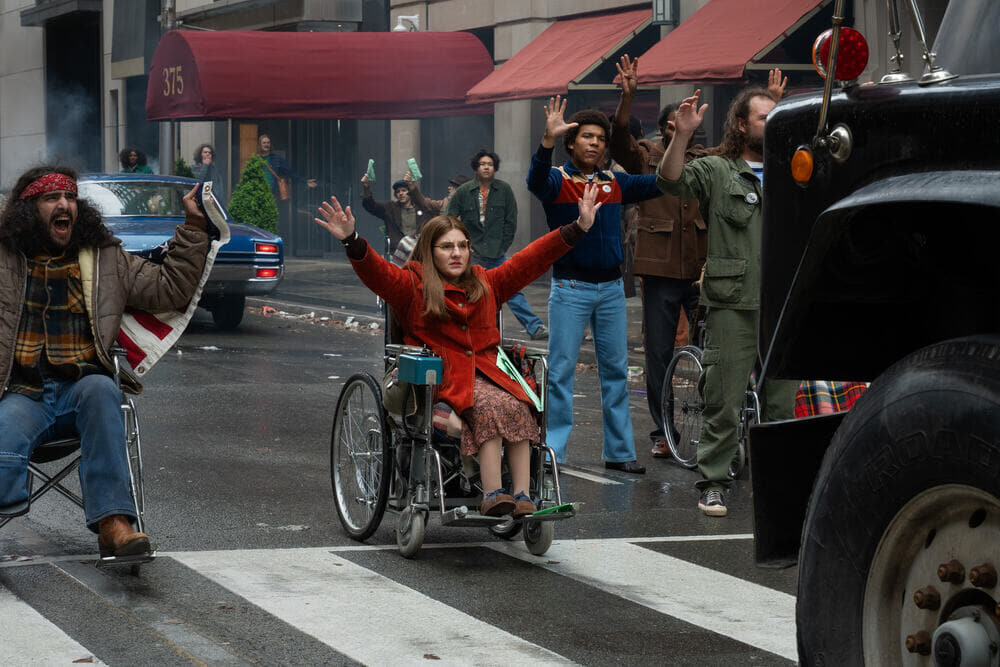
Ruth Madeley stars in BEING HEUMANN. (Photo: Apple TV)
Being Heumann
Although it pushes some familiar crowd-pleasing buttons, this true-life period drama from director Sian Heder (Coda) is another inspirational salute to the power of grassroots activism. It follows Judy Heumann (Ruth Madeley), who assembled a ragtag coalition of disability-rights advocates in 1977 and led a San Francisco sit-in for weeks to lobby a stubborn bureaucrat (Mark Ruffalo) to sign an order ratifying a federal civil-rights law guaranteeing anti-discrimination and equal access measures. Madeley’s galvanizing portrayal steers an earnest yet rousing film that balances humor and humanity while largely avoiding heavy-handed messaging. Heder gives her subjects a well-deserved turn in the spotlight, and their story still resonates. (Rated R, 127 minutes).
Club Kid
Exploring arrested development from a unique sociocultural perspective, this quirky yet bittersweet comedy from director Jordan Firstman (Rotting in the Sun) overcomes its narrative predictability with abundant crowd-pleasing charm. Firstman stars as Peter, a drugged-out New York gay nightclub promoter who discovers he has a precocious 10-year-old British son (Reggie Absolom) despite claiming he’s never even slept with a woman. At any rate, Peter’s initial reluctance to take in the youngster instead gives him purpose and a wake-up call to be responsible. Despite some contrivances in Firstman’s screenplay, their burgeoning bond provides a resonant emotional core to this humorous and heartwarming look at progressive family dynamics. (Rated R, 122 minutes).
Littermates
The ambiguity can be both charming and frustrating in this subversively offbeat genre hybrid that mixes dystopian science fiction with absurdist social satire. England is ravaged by an unexplained conflict when a homeowner (Oliver Woolf) takes in two strangers (Joey Bader, Kaylee McGregor) who have lost their memory and exhibit childlike behavior. He teaches them until they form a sibling dynamic, but not everything is an innocent as it seems. Some of the narrative elements remain intentionally aloof, yet there’s enough twisty cleverness and atmospheric intrigue to make its surreal journey worthwhile. The film evolves into a slight but discomforting psychological thriller about survival and control. (Not rated, 87 minutes).
Mouse
A sharply observed portrait of female adolescence, this bittersweet coming-of-age saga that probes anxieties, insecurities, and the fragile bonds of friendship through a nostalgic lens. In 2002, Arkansas teenager Minnie (Katherine Mallen Kupferer) and her best friend, musical-theater prodigy Callie (Chloe Coleman), are torn apart by tragedy before their senior year, causing the relationship between Minnie and Callie’s mother (Sophie Okonedo), who teaches at their high school. to take an unexpected turn. The nuanced screenplay by co-director Kelly Thompson (Ghostlight) is tender and heartfelt. It finds a fresh perspective on familiar themes of grief and self-discovery while balancing the emotional rollercoaster that goes with the territory. (Rated R, 121 minutes).
Paradise Lost
More adept at manufacturing shocks than examining their human consequences, this unsettling psychological thriller from Korean director Yeon Sang-ho (Train to Busan) struggles to translate its moral complexity into consistent suspense. It centers on a bereaved mother (Kim Hyun-joo) whose young son disappeared from a school bus, prompting her to commission an AI simulation of the child. Nine years later, a traumatized young man (Bae Hyun-sung) claims to be her actual son, which tests their bond amid uncertain dynamics. Despite a provocative science-fiction concept and committed performances, the final-act pivot into visceral violence and genre-thriller mechanics feels jarring alongside the film’s more subdued emotional core. (Not rated, 101 minutes).
Soul Patrol
Restoring neglected veterans to the historical record without reducing the impact of their experiences or contributions, this compelling documentary unearths a crucial chapter of military history. Specifically, director J.M. Harper chronicles the reunion of the first all-Black special operations unit deployed during the Vietnam War — blending intimate roundtable testimonies with dramatic reenactments and archival footage. The film confronts the lingering psychological trauma of combat alongside the pervasive racial hostility these veterans faced from their own ranks. It’s an affecting account of disillusionment and endurance, as the quiet dignity of its surviving subjects transforms an uneven narrative into a moving tribute to brotherhood and service. (Not rated, 99 minutes).