The End of Oak Street
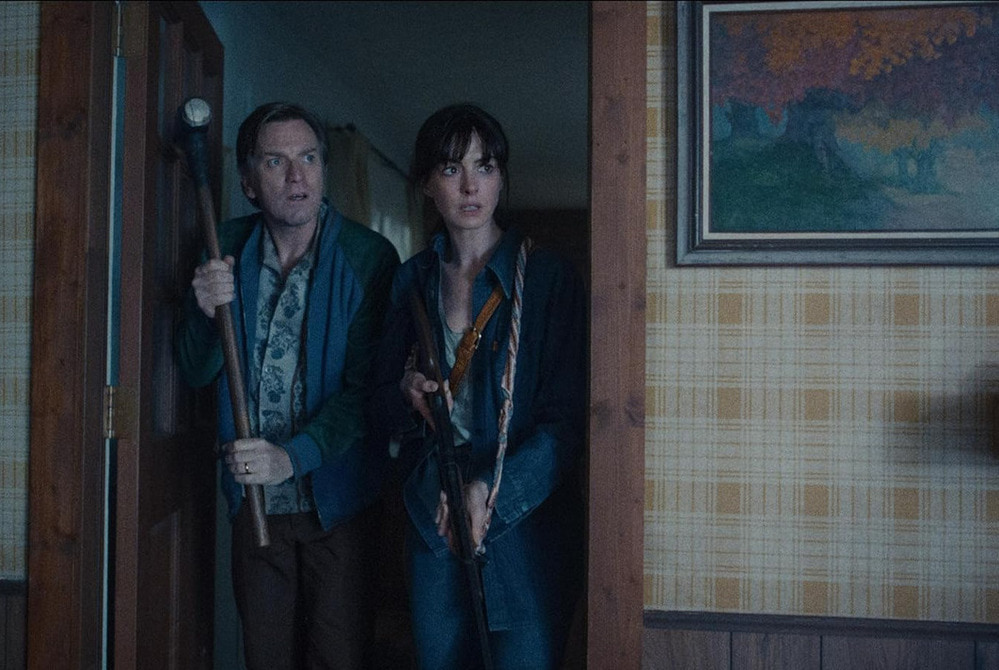
Ewan McGregor and Anne Hathaway star in THE END OF OAK STREET. (Photo: Warner Bros,)
Transporting moviegoers back a generation, The End of Oak Street takes its characters significantly further into the past.
Starting out as an affectionate throwback to 1980s kid-friendly suburban comedies — with its analog world of handheld flashlights, Walkman radios, and landline phones — this playful yet suspenseful thriller from director David Robert Mitchell (It Ends) pulls the rug out from beneath its comfortable familiarity.
The film effectively curdles into something much darker and more intense, as the supposedly idyllic community reveals cracks that extend well beyond the marital strife at its center. When there are prehistoric predators on the loose, suddenly nothing else seems very important.
In 1982, Denise (Anne Hathaway) is an aspiring novelist living on a cul-de-sac with her husband, Greg (Ewan McGregor), and their two kids (Maisy Stella and Christian Convery). There’s a dog, too, of course.
Recently unemployed Greg tries to mask his hardship by delivering pizzas for extra cash. However, their relationship was already crumbling, with the children caught in the middle.
Neighbors notice some strange phenomena coinciding with a power outage, leading to the sight of carnivorous dinosaurs running through the yard, seemingly without explanation. “I think our whole neighborhood has moved,” Denise observes.
At first, they respond to the increasingly bizarre circumstances with naive disbelief, although their blind optimism quickly evaporates once they understand the scale of the danger. As survivors and resources dwindle, they frantically search for a way home — wherever and whenever that might be.
Mitchell’s screenplay demonstrates tonal agility, frequently pivoting from amusing to terrifying on a dime. It embraces its inherent cheesiness, tongue firmly in cheek, while still unspooling a couple of clever twists.
The underlying narrative is fairly conventional, but fortunately, Mitchell understands the absurdity of what he’s selling. The loopy premise and breezy execution give familiar ingredients a welcome self-awareness, which keeps its more ridiculous turns from collapsing under their own weight.
Rather than belaboring its premise, the film gradually tightens the screws around its beleaguered family. Along the way, dynamic sound design and seamless effects produce several genuinely effective jump scares.
Proudly wearing its nostalgic influences, The End of Oak Street doesn’t reinvent the suburban mystery. It simply turns the lights off, adds some menacing monsters, and reminds us that there’s nothing quite so frightening as coming home and discovering that home isn’t where you left it.