Capsule reviews for Aug. 7
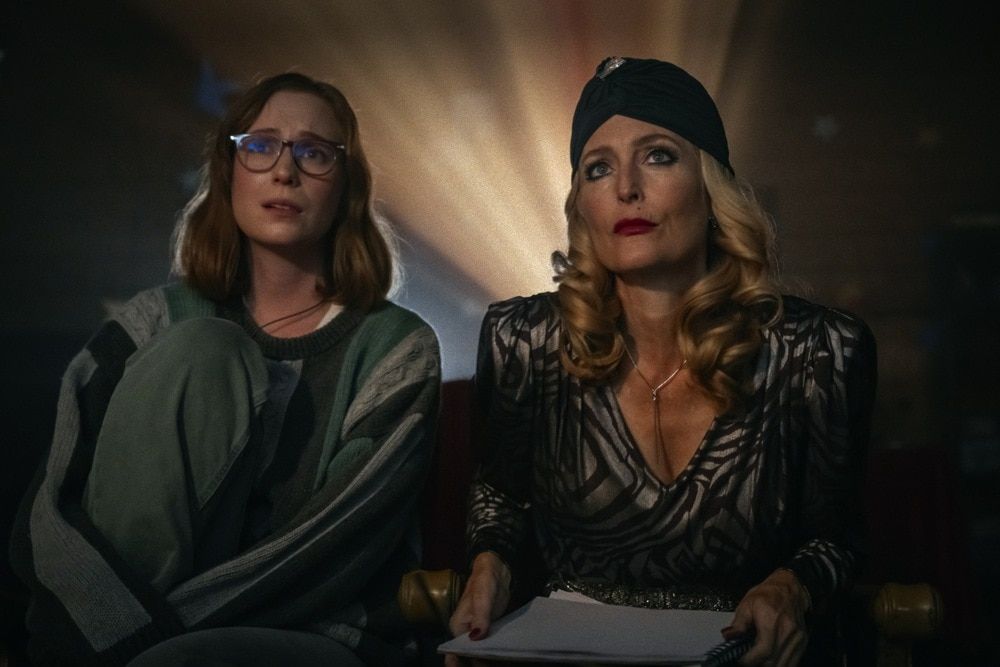
Hannah Einbender and Gillian Anderson star in TEENAGE SEX AND DEATH AND CAMP MIASMA. (Photo: Mubi)
Beast Race
Infusing a conventional dystopian action thriller with rich cultural influences, this adrenaline-fueled Brazilian saga co-directed by Fernando Meirelles (City of God) offsets narrative cliches with evocative visuals and exhilarating physicality. It’s set in a decimated and anarchic near-future Rio de Janeiro, where Mano (Matheus Abreu), who is forced into a lethal series of cutthroat competitions by a corrupt government official (Rodrigo Santoro) to save his abducted sister (Thaina Duarte). Even if the underlying story downplays the emotional stakes, the film impressively weaves parkour and capoeira into the gritty set pieces, which becomes the point. It becomes less about where it’s going then how it gets there. (Not rated, 124 minutes).
The Big Cheese
Blending the flavor of a foodie documentary with the intensity of a competition doc, this crowd-pleaser is cheesy in a good way, regardless of your lactose tolerance. It goes inside the annual gathering in France to determine the world’s most talented experts in dairy delicacies, known as “cheesemongers.” Specifically, the film tracks the efforts the two-person underdog American team and their eccentric coach looking to break through the European snobbery. The structural ingredients are familiar, although rookie director Sarah Joe Wolansky strikes a tasty balance of absurdity and sincerity. We should have known the path to patriotic unity ran through our collective stomachs. (Not rated, 87 minutes).
Cookie Queens
Sugary in more ways than one, this endearing documentary finds its sweet spot by going beyond the competition to sell the most Thin Mints or Tagalongs. It does follow four diverse young Girl Scouts during a hectic season as they strive to meet their ambitious sales goals. However, director Alysa Nahmias (Art and Krimes by Krimes) uses the ritualistic cookie craze to launch a broader glimpse into entrepreneurial spirit, self-discovery, the commercial aspects of fundraising, and the pressures of growing up. The tender and insightful film has cuteness to spare, of course, as we root for their sales success while also finding their voice and purpose. (Rated G, 91 minutes).
Do Us Part
Some big laughs are buried beneath the melodramatic contrivances in this low-budget relationship comedy about past secrets and wedding-day jitters. In the hours leading up to the ceremony, Ryan (Travis Laughlin) is making last-minute preparations with his morally compromised best man and former college roommate (Reed Arnold, who’s also the writer and director). Cue the unannounced arrival of Rose (Kelly Russo), an ex-classmate carrying unrequited feelings for Ryan, which might be mutual. Arnold’s sarcastic one-liners keep things lively for a while, before the film settles for a more familiar story of friendships being tested amid an uncertain future — in the process depleting its zany energy. (Not rated, 92 minutes).
Late Fame
A richly textured performance by Willem Dafoe galvanizes this bittersweet character study from director Kent Jones (Diane) about generational tastes, artistic appreciation, and creative ego. Dafoe plays Ed, a New York postal worker whose obscure collection of poetry from the 1970s is rediscovered by a Gen Z intellectual (Edmund Donovan). Ed is skeptical about joining an upstart collective of old-school writers half his age, but becomes drawn to a troubled young actress (Greta Lee) while reluctantly exploring a creative rebirth. Even if it’s far-fetched in spots and too predictable in others, the bittersweet drama is a quietly perceptive exploration of an aging artist at a crossroads. (Rated R, 96 minutes).
Olmo
Tackling familiar coming-of-age themes through a culturally specific lens, this charming slice of adolescent nostalgia from director Fernando Eimbcke (Duck Season) weaves gentle comedy throughout its bittersweet examination of family turmoil. Olmo (Aivan Uttapa) is a rebellious teenager in late 1970s New Mexico, often forced to care for his bedridden father because his mother is working extra shifts or his sister is being difficult. But when Olmo and his best friend (Diego Olmedo) want to sneak away to a party to see a girl, their plan leads to chaos. The bilingual screenplay resonates with genuine poignancy beneath its rambunctious surface. The setting and performances feel authentic. (Not rated, 84 minutes).
The Run
While withholding contextual details to preserve elements of mystery, this slow-burning dystopian thriller exposes the formulaic nature of its near-future survival saga. It’s set in Australia amid a global fertility crisis, when a teenage mother (Charlotte Maggi) is trying to protect herself and her baby from ruthless traffickers. She forms a reluctant alliance with a rogue criminal (Callan Mulvey) who must reconcile his own conflicting motives while facing a moral dilemma. As the sluggish screenplay by director Stephen de Villiers funnels toward a final showdown, the film conveys a gritty desolation while its story of maternal resilience otherwise struggles to escalate the emotional stakes. (Not rated, 117 minutes).
Teenage Sex and Death at Camp Miasma
Reshaping genre conventions into a layered exploration of creative obsession, queer identity, and popular culture, this evocative thriller from director Jane Schoenbrun (I Saw the TV Glow) resonates with formal audacity and emotional conviction. Hired to direct a slasher franchise reboot, Kris (Hannah Einbender) becomes fixated on casting the “final girl” from the original film (Gillian Anderson), which triggers a surreal psychosexual odyssey that blurs the mutual lines between life and art. Despite a fragmented narrative, the film’s stylishly raw visual aesthetic and magnetic performances lend an almost dreamlike allure. Schoenbrun finds offbeat charms while exploring familiar coming-of-age themes through a fresh satirical lens. (Rated R, 112 minutes).