Capsule reviews for July 10
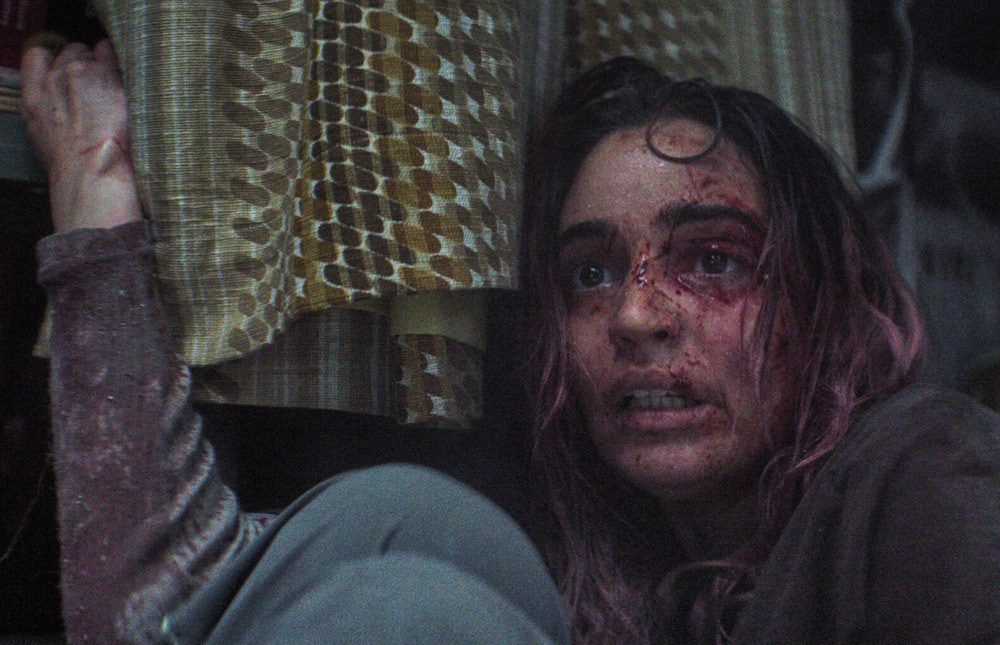
Souheila Yacoub stars in EVIL DEAD BURN. (Photo: Warner Bros.)
Evil Dead Burn
As the franchise continues to torch connections to its scrappy low-budget roots, this latest sequel retains the relentless brutality without much tonal inventiveness or narrative ingenuity. Instead, the goal seems to be just mercilessly bludgeoning moviegoers and characters alike through the story of Alice (Souheila Yacoub), who grieves her husband’s tragic death with his family, only to find that there’s something more to their collectively off-putting nature. By the time Alice figures out the extent of the demonic connections, it’s too late to escape. Despite some stylish touches from French director Sebastian Vanicek (Infested), the film is drenched in gore but doesn’t meaningfully advance the mythology. (Rated R, 110 minutes).
The Floaters
Almost any summer-camp saga carries nostalgic vibes, but despite some scattered laughs for those who can relate, this offbeat comedy of arrested development and artistic expression feels familiar in unintended ways. Nomi (Jackie Tohn) is a fledgling musician whose best friend (Sarah Podemski) recruits her as a counselor at their Orthodox Jewish summer camp. Searching for purpose, Nomi mentors a troupe of misfit theater nerds, helping them find their voice in advance of a competition against a rival camp. Playfully poking fun at political correctness and religious rites of passage, the film’s feel-good aspirations are compromised by thinly sketched characters and a woefully predictable script. (Not rated, 101 minutes).
The Isolate Thief
Although admirably taking a character-driven approach to thematically generic material, this western period drama struggles to develop tension amid its sluggish pace and predictable plot. It’s set during the Civil War, when a young woman (Mackenzie Foy) is stranded at a remote outpost after her father’s death. As she prepares to vacate, a dangerous outlaw (Sean Bean) arrives with his gang to seize control. Both sides conceal ulterior motives as a showdown looms in a desperate quest for survival. Through its harsh terrain and rustic landscapes, the film conveys a sense of desolation and despair yet ultimately lacks the ingenuity of its resilient and resourceful heroine. (Not rated, 95 minutes).
Night Nurse
The creepy atmosphere outshines the muddled story in this mildly unsettling thriller of greed, obsession, and psychosexual power dynamics that’s more tedious than provocative. It centers on Eleni (Cemre Paksoy), an inexperienced new caretaker at an assisted-living facility paired with an affluent resident (Bruce McKenzie) suffering from apparent memory issues. Following a series of suggestive anonymous phone calls, Eleni becomes drawn into a seductive web while suspecting the old man might hold some dark secrets and desires. The film is visually alluring, yet the screenplay by rookie director Georgia Bernstein starts spinning its wheels without sufficient incentive to invest in unsympathetic characters or their twisted gamesmanship. (Not rated, 95 minutes).
The Outer Threat
For a film that places the future of humanity in the balance, this low-key dystopian thriller curiously lacks significant tension or intrigue. It follows an astrophysicist (Mark O’Brien) whose obsessive research uncovers evidence of extraterrestrial life. Not long afterward, widespread blackouts suggest that he might be a target, leading him on a paranoid mission with his girlfriend (Constance Wu) and her kids to discover the truth and unravel the mystery behind their attackers. The screenplay by rookie director William Woods dabbles in speculative science and wacky conspiracies, which it takes too seriously, while struggling to mesh its science-fiction adventure with an underdeveloped family drama. (Not rated, 94 minutes).
Reading Lolita in Tehran
Celebrating resistance and the connective ability of great novels, this adaptation of Azar Nafisi’s acclaimed feminist memoir from director Eran Riklis (The Syrian Bride) enables its heartfelt intentions to overcome its uneven script. Beginning in 1979, Azar (Golshifteh Farahani) teaches classic literature to her mostly female university students in Iran, only to find that her teachings conflict with a movement to suppress women’s rights. Years later, Azar’s defiance puts her in the center of sociopolitical turmoil as she gathers her former pupils for a therapeutic book club. Divided into chapters, the film’s episodic structure only slightly inhibits its cumulative impact, thanks mostly to Farahani’s determination. (Not rated, 107 minutes).
Remake
Both an elegy for a son and a meditation on artistic purpose, this autobiographical documentary from director Ross McElwee (Sherman’s March) transforms unbearable personal loss into a powerfully intimate probe of memory, creativity, and family legacies. Using his camera as a therapeutic tool, McElwee crafts a bittersweet tribute to his late son who battled mental illness and addictions, finds parallels in the failed attempts to remake Sherman’s March into a fictional comedy in the 1990s, and ties everything together with present-day reflection that never feels self-indulgent. The film balances humor with heartbreak and sorrow with hope in an emotionally resonant glimpse into love and remembrance. (Not rated, 117 minutes).
Rhythm Is a Dancer
Despite some heartfelt intentions, this low-budget saga of millennial self-discovery struggles to balance its silly eccentricities with deeper dramatic ambitions. Aspiring dancer Ro (Lauren Caster, who also wrote and directed) is aimless and approaching 30 as she moves across the country for a summer to reconnect with her lesbian mother (Amy Aquino), who conceived Ro via insemination. She’s also secretly tracking down her biological father (Tate Donovan), which causes friction while helping Ro find herself. Rough around the edges, the film lacks sufficient subtlety and nuance as a probe of reconciliation, identity, and atypical family dynamics. Taking a conventional path to catharsis, it’s cute but inconsequential. (Not rated, 92 minutes).
Westhampton
A committed portrayal by Finn Wittrock (“American Horror Story”) can’t sufficiently enliven this dreary and introspective character study about self-loathing and catharsis through art. Wittrock plays a Long Island filmmaker whose pretentious autobiographical debut isn’t particularly well-received. That’s especially true back home, where he returns to handle some family business, haunted by tragedy and forced to confront his past demons by acquaintances who question his motives. The screenplay by director Christian Nilsson (Dashcam) is a heartfelt glimpse into the creative process when it comes to separating fact from fiction. Yet in relying upon emotional calculations and angst-ridden brooding, it’s not especially insightful or compelling. (Not rated, 94 minutes).