Dracula
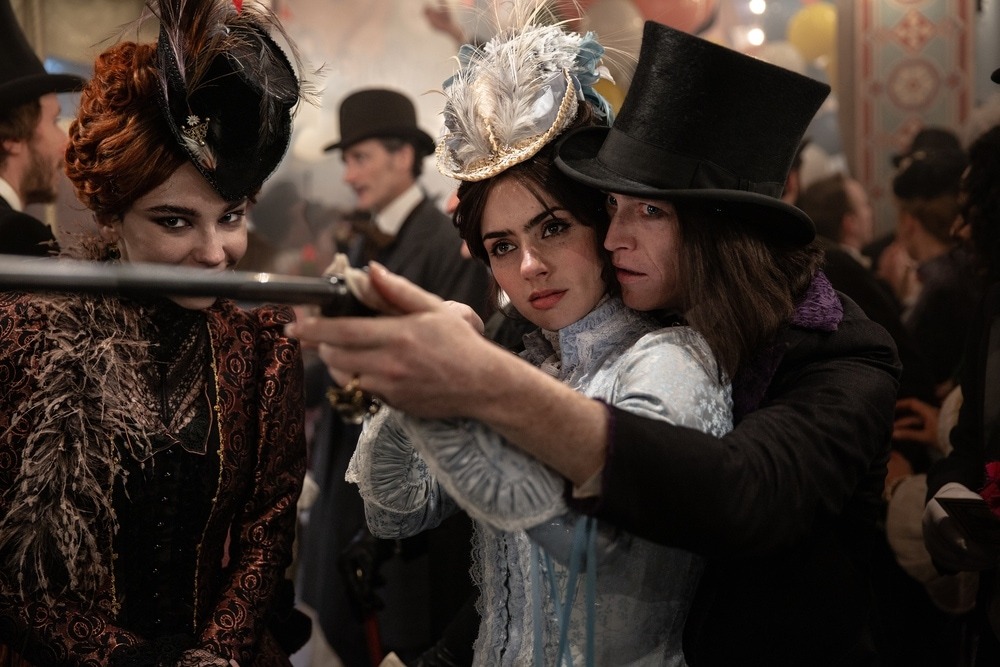
Zoe Bleu and Caleb Landry Jones star in DRACULA. (Photo: Vertical)
In the latest big-screen interpretation of the Dracula mythology, its horror roots are downplayed in favor of swashbuckling action and star-crossed romance.
This handsomely mounted if wildly uneven adaptation from French director Luc Besson (The Fifth Element) is atmospheric and evocative yet almost cartoonishly over the top and difficult to take seriously.
It opens with a prologue set in the 15th century, tracking with the character’s Vlad the Impaler literary parallels. He wins on the battlefield but his wife (Zoe Bleu) is murdered, causing him to renounce his religion and retreat from public life as a prince.
Cursed with eternal life as a deformed vampire warlord, Dracula is burdened with grief and lingering resentment, especially toward the Catholic church, while living in isolation in his dark and suitably ornate Transylvanian castle.
Extended flashbacks detail how he acquired his fangs, suffered his crisis of faith, and developed his appetite for bloody revenge.
He becomes determined to somehow reunite with his true love, even 400 years later, when he suspects that she might have been reincarnated and married a young Paris solicitor (Ewens Abid) summoned by the Count for a real-estate deal.
Meanwhile, a determined priest (Christoph Waltz) begins poking around in hopes of exposing Dracula and ending his crusade of terror.
The film emphasizes spectacle over substance while functioning as an origin story for author Bram Stoker’s doomed gothic antihero. The cinematography, hair, and costumes add to the visual appeal.
Taking extensive liberties with the source material, Besson’s screenplay leans into Dracula’s eccentricities even more than other projects — during a dinner sequence, he growls about being “retired” while chowing down on a mouse to go with his plate of peas.
Collaborating again with the filmmaker, Jones is effectively creepy and twitchy in the title role, portraying him more as a misunderstood outsider than an outright villain, and the narrative momentum lags whenever he’s not on screen.
Aside from the period tropes and awkward epic ambitions, the tone is all over the place, which prevents the film from registering more deeply as an introspective saga of lost love.
The basic story has been told so many times, in so many different ways, that it’s difficult for a new version to stand out of distinguish itself. This overwrought Dracula has some bite, but it fails to breathe new life into the legend.
Rated R, 129 minutes.