Father Mother Sister Brother
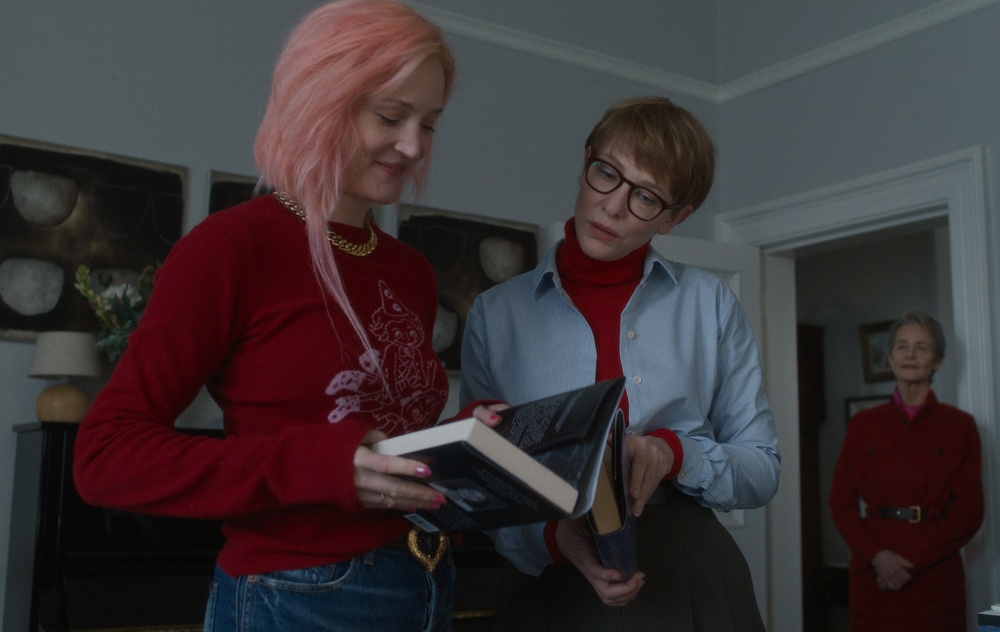
Vicky Krieps, Cate Blanchett, and Charlotte Rampling star in FATHER MOTHER SISTER BROTHER. (Photo: Mubi)
Setting aside the dysfunctional bickering, Father Mother Sister Brother has a different and more nuanced method of exploring fractured family dynamics.
Instead, this triptych of vignettes about adult children and their estranged parents from idiosyncratic director Jim Jarmusch (Only Lovers Left Alive) revels in awkward silences and uncomfortable body language.
Bolstered by a top-notch cast in all three self-contained segments — which resemble a compilation of one-act plays — the result is quietly perceptive in spots but overall too slight and sketchy.
In each vignette, what’s not being said is more important than the words being spoken, and those who aren’t present are perhaps more vital than those who are.
We’re first introduced to Jeff (Adam Driver) and Emily (Miyam Bialik), who are driving to visit their quirky, widowed father (Tom Waits) at his remote farmhouse. Jeff is eager to help with chores and supplies, while Emily keeps her distance.
Next, a stern Irish author (Charlotte Rampling) prepares to welcome her daughters Timothea (Cate Blanchett) and Lilith (Vicky Krieps) for tea. Their visit yields tension and a reluctance to share throughout.
Finally, there’s Billy (Luka Sabbat) and Skye (Indya Moore), twin siblings who reunite in Paris to visit their late parents’ apartment, bonding over their search for closure.
The connective tissue is thematic rather than narrative, along with some playfully random references to fake Rolex watches, skateboarders, and toasts with nontraditional drinks.
Layered with melancholy compassion, Jarmusch’s screenplay examines how family roles shift and evolve due to age and heath, economic stability, and other circumstances — along with the memories and secrets we carry.
The film confronts our obligations as parents, children, siblings, caretakers, nurturers, or providers. As Jeff points out: “You can choose your friends and your lovers, but you can’t choose your family.”
Jarmusch probes subtle factors that foster resentment and hostility, along with an ingrained sense of responsibility, even as a byproduct of poor choices. Episodic by nature, it’s also emotionally chilly, which inhibits a deeper sympathy even for those who identify with the relationships.
Father Mother Sister Brother emphasizes observations more than resolutions. Only in the final chapter do the characters seem to wind up in a significantly different headspace than they began.
While probing how we drift apart from close relatives despite being inextricably linked, the film enables us to share the discomfort yet feels generally aimless and underdeveloped, and more trivial than substantial.
Rated R, 110 minutes.