By Any Means
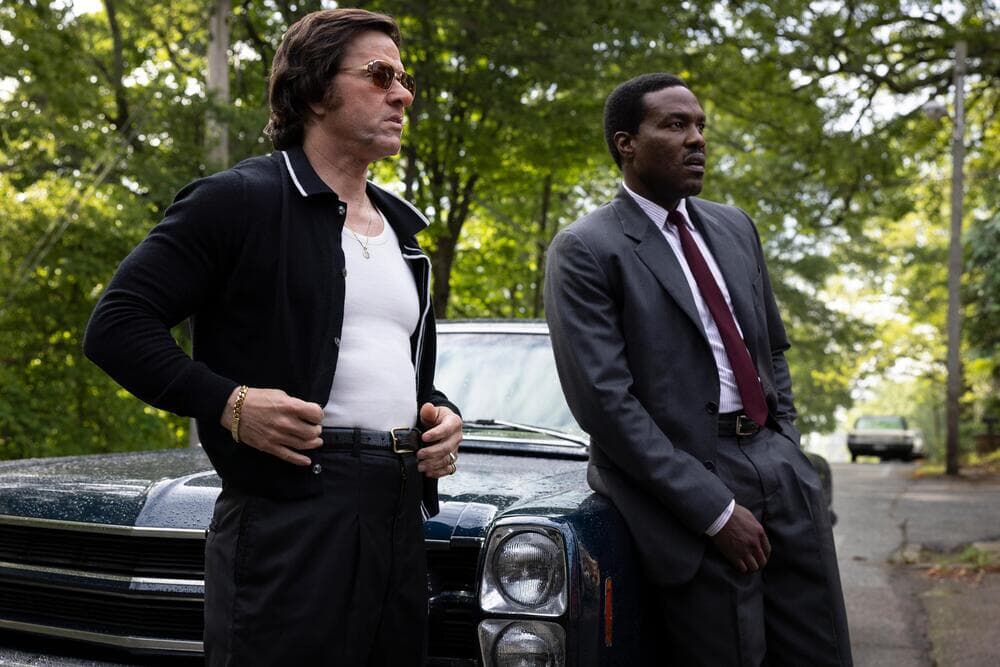
Mark Wahlberg and Yahya Abdul-Mateen star in BY ANY MEANS (Photo: Paramount)
Two potentially compelling biopics compete for the spotlight in By Any Means, which squeezes them both into a standard buddy-cop framework.
Muddling its true-life source material, this uneven procedural thriller from director Elegance Bratton (The Inspection) has worthwhile ambitions and intentions yet too often leans into cliches and heavy-handed embellishments.
The story immerses us in an amber-hued setting in the post-Jim Crow South, where casual racism — intertwined with Christian nationalism — is ingrained in the culture.
It’s set in 1966 Mississippi, where Wayne Strider (Yahya Abdul-Mateen II) is a mild-mannered Black FBI agent who returns to his hometown with his wife (Nicole Beharie), when a local civil rights activist (Giancarlo Esposito) is murdered via arson.
The federal agent in charge (David Strathairn) reluctantly allows Strider to join the case, but only as a partner for Gregory Scarpa (Mark Wahlberg), a hot-headed enforcer with mob ties and a particularly nonchalant approach to violence.
Suspicion naturally gravitates toward the active local Klan chapter with a history of such crimes, and fear a potential bureaucratic cover-up. Within such turbulent surroundings, Strider’s position of authority, combined with his skin color, results in heightened public scrutiny and makes him more of a target.
Scarpa is keenly aware of that, and uses it both to his amusement and advantage while pushing Strider to the edge. One of them plays by the book, and the other throws the book out the window.
That forces Strider to adjust his own moral compass. Of course, they need to find common ground as the stakes intensify, in the interest of both justice and self-preservation.
By Any Means is propelled by the fascinating dynamics and volatile chemistry between the two men, including some tense exchanges as they develop an uneasy trust.
The periphery characters are thinly sketched in the screenplay by Sascha Penn (“Power Book III: Raising Kanan”), which carries Strider’s idealistic mindset while lacking the narrative focus to yield a deeper contemporary resonance.
Through the fictional composite character of Strider, the film seeks to honor unheralded pioneer lawmen. Abdul-Mateen underplays the role nicely while struggling to get inside the head of an introvert outshined by his charismatic sidekick.
The particulars of the investigation aren’t very suspenseful, which necessitates the more character-driven approach. Strider is both angered and intrigued by Scarpa — and moviegoers might have the same conflicted feelings about the film itself.
Rated R, 107 minutes.