Capsule reviews for July 24
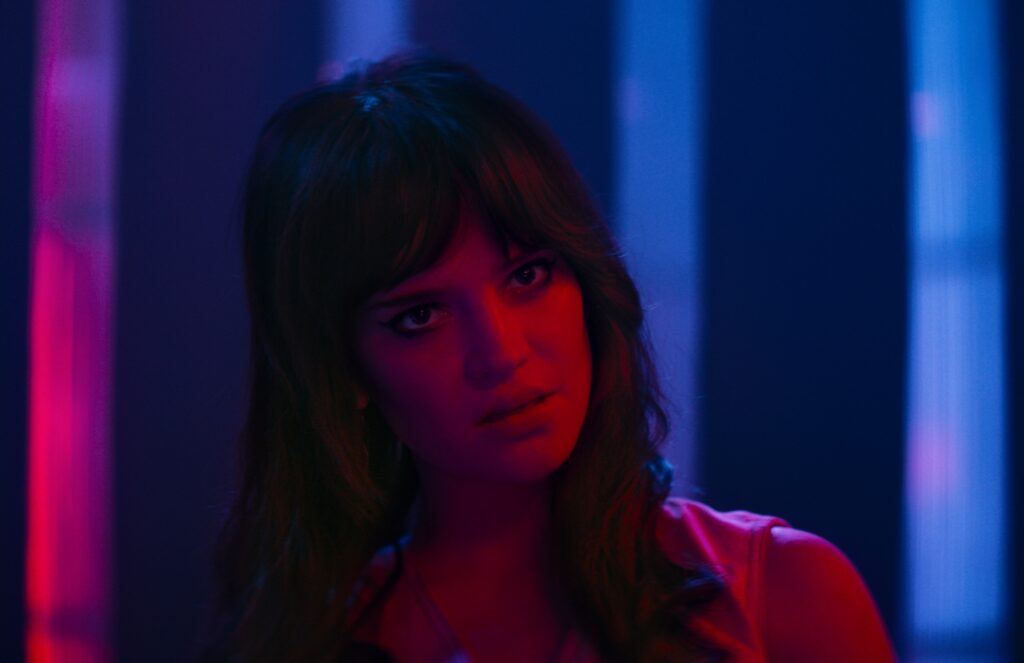
Sophie Thatcher stars in HER PRIVATE HELL. (Photo: Neon)
Brunello: The Gracious Visionary
Evidently, acclaimed Italian filmmaker Giuseppe Tornatore is a fan of forward-thinking fashion designer and philanthropist Brunello Cucinelli, as are all of the interviewees in this hagiographic documentary. Cucinelli’s life and career might be worth spotlighting, but Tornatore (Cinema Paradiso) seems to confuse flattery with insight, which compromises any attempt at a well-rounded portrait. The film mixes philosophical nuggets from its charismatic subject with gushing anecdotes from high-profile admirers, plus amber-hued re-enactments to fill in some chronological gaps. The result is mildly illuminating and appropriately stylish in its appearance, yet feels like it’s always trying to push Cucinelli’s greatness rather than just telling his story. (Rated PG-13, 127 minutes).
Due West
The word “abortion” is never spoken in this sparse yet gut-wrenching drama, and it’s probably for the best — the film avoids heavy-handed posturing and makes its most impactful statements through its protagonist and her desperate circumstances. It follows a woman (Adrianne Palicki) in a conservative small town in West Texas who is hiding a secret and feeling shame. Though little is revealed about how she became pregnant, she’s unable to find the medical care she needs, and short on funds for alternative options, prompting a lawbreaking decision. A fully committed performance by Palicki (John Wick) brings clear-eyed compassion to a woman forced to suffer in silence. (Not rated, 81 minutes).
Haunted Heist
Even with its obvious low-budget constraints, this horror-comedy marking the directorial debut of actor Rel Howery is a lazy and uninspired effort devoid of laughs and frights. Howery plays one of a quartet (along with Tiffany Haddish, Andrew Bachelor, and Karlous Miller) of ex-college buddies who reunite to pilfer an antique from an abandoned house. However, their plan is foiled by a pair of racist ghosts who turn their scheme into a nightmarish battle for survival. What might have worked as a short sketch feels painfully overextended at feature length, with an embarrassing script that doesn’t play to the talents of any of the performers. (Rated R, 87 minutes).
Her Private Hell
Despite some stylish visual flourishes, this hollow and self-indulgent thriller from director Nicolas Winding Refn (Drive) emphasizes atmosphere and mood over narrative coherence or emotional resonance. In a near-future city plagued by a mysterious mist, an actress (Sophie Thatcher) is shooting her latest project while engaged in family drama involving her mogul father (Dougray Scott) and young stepmother (Havana Rose Liu). Her path crosses with an American soldier (Charles Melton) on a harrowing mission to rescue his daughter. Destined to polarize moviegoers, the uneven and underdeveloped screenplay wraps its genre pretenses in an artificial aesthetic that lacks deeper ambition. The result is more tedious than provocative. (Rated R, 109 minutes).
Kill Code
Even by its low-budget standards, the threadbare production values and embarrassing effects render this cyberpunk dystopian thriller an intermittently laughable snoozer. It’s set in a war-ravaged future, when a corrupt tech mogul (Harvey Keitel) claims to reform the prison system by giving watches infected with a deadly virus to criminals, then having them combat one another. Amid the resulting urban anarchy, one of his operatives (Franzi Schissler) and a target (Tyrese Gibson) uncover secrets that could bring the program down. Squandering a capable cast — save for Keitel’s white, slicked-back mane — the incomprehensible screenplay combines familiar genre concepts without developing a hint of suspense or intrigue. (Not rated, 87 minutes).
Sheep in the Box
Given its subject matter, perhaps it’s appropriate that this drama about the convergence of grief and technology downplays the trademark humanity and emotional depth of Japanese filmmaker Hirokazu Koreeda (Shoplifters). However, this chilly and muddled cautionary tale doesn’t bring much new perspective to conversations about sentient AI. An architect (Haruka Ayase) and her husband (Daigo Yamamoto) agree to participate in a promotion from a company experimenting with humanoid replicas of deceased family members — in this case, their 7-year-old son. Yet their second chance comes with unforeseen hurdles. Aside from strong performances and some intriguing dynamics, the film lacks the thematic complexity to supplement its curiosity. (Rated PG, 126 minutes).