Capsule reviews for Oct. 3
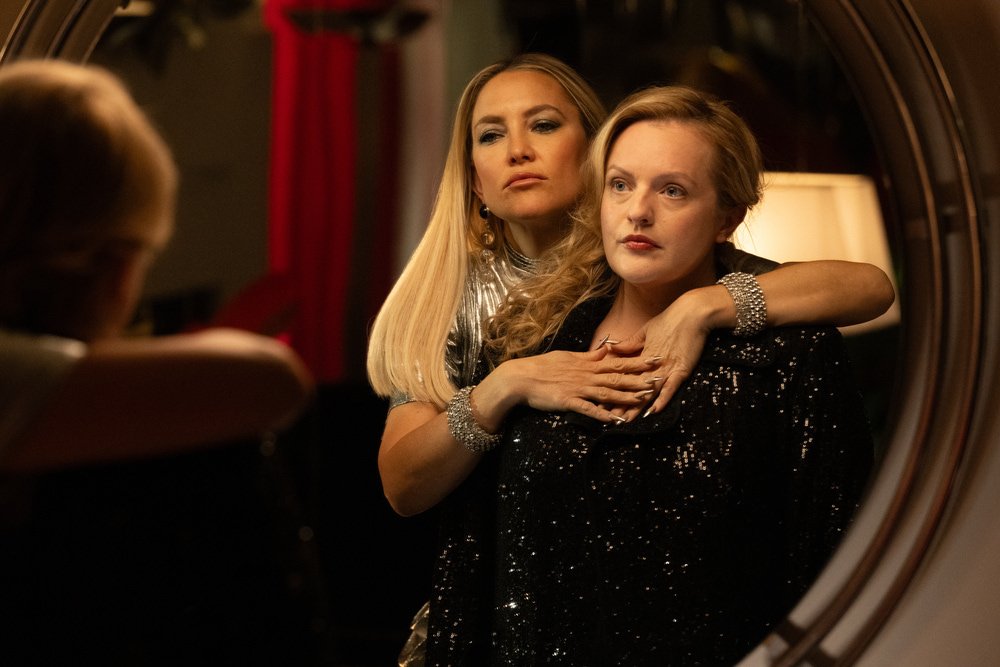
Kate Hudson and Elisabeth Moss star in SHELL. (Photo: Republic Pictures)
The Alabama Solution
Both eye-opening and infuriating, this riveting documentary exposes systemic failures in the Alabama state prison system, along with the resulting bureaucratic coverups, through some top-notch investigative journalism. Specifically, the film uses video from incarcerated whistleblowers to document overcrowding, decrepit conditions, allegations of officer abuse, and indifference toward prisoner welfare in a state that severely restricts media access to facilities and inmate records. When public protests began to spread the word, complicit officials resist a probe by the Department of Justice. Regardless of your views on inmate rights, you salute the bravery of these men in the face of injustice, sharing their stories while risking retaliation. (Rated R, 117 minutes).
Are We Good?
We’ve seen many accounts of grief and healing on screen, but this contemplative yet engaging documentary hits different, and that’s due almost entirely to its subject. The film follows comedian and podcaster Marc Maron as he processes the 2020 death of his partner, filmmaker Lynn Shelton, in the months and years that followed. In the process, we watch as Maron tries to use his work as a coping mechanism while also being open with his feelings while still maintaining his acerbic edge and pondering the future. Through interviews and archival footage, the film offers a well-rounded if straightforward portrait that mostly steers clear of bland hagiography. (Not rated, 97 minutes).
Bone Lake
Some intriguing character dynamics and a subversive playfulness bolster this erotic thriller despite a screenplay that winds up more manipulative than clever. It helps that Sage (Maddie Hasson) and Diego (Marco Pigossi) are egregiously accommodating when they agree to share their secluded rental house with a free-spirited couple (Alex Roe and Andra Nechita) after an apparent booking mixup. However, after some initial bonding, the newcomers lure them into a psychosexual web with sinister intentions. The buildup generates some suspense as its unsettling scenario unfolds before undermining itself during a lazy climactic showdown with gratuitous gore. But as a genre hybrid, it achieves a certain throwback vibe. (Rated R, 94 minutes).
Killing Faith
At least this evocative western sidesteps genre cliches, even if its character-driven story of redemption and resilience is relentlessly bleak. It’s set in 1849, when a widowed doctor (Guy Pearce), agrees to escort a little girl — rumored to be harboring evil powers — and a freed slave (DeWanda Wise), who is her caretaker, across the rugged American frontier to visit an eccentric preacher (Bill Pullman) with conflicting motives. The screenplay by director Ned Crowley (Middle Man) takes a while to get where it’s going, but the film is infused with humanity amid the desolation and despair. Plus, the scenes with Pearce and Pullman ratchet up the intensity. (Rated R, 108 minutes).
Orwell
It’s been 75 years since George Orwell died and more than four decades since the year imagined in his seminal novel, but the British author’s vision seems more relevant than ever. Enter this ambitious documentary from director Raoul Peck (I Am Not Your Negro), which uses a fresh lens to explore Orwell’s life and career, and primarily his ideas on authoritarianism and social order in 1984 and Animal Farm. Peck infuses the biographical material with an often dazzling compilation of images and tangential ideas that range from intriguing to unfocused. However, while it might lack restraint, the result is consistently provocative without resorting to heavy-handed preaching. (Rated R, 119 minutes).
The Partisan
In trying to untangle the true-life tale of an enigmatic World War II hero, this disjointed period piece yields more questions than answers. Its subject is Krystyna Skarbek (Morgane Polanski), a Polish agent working undercover for British intelligence trying to undermine the Nazi regime. She keeps her identity secret to the extent that even her bosses aren’t sure of her allegiance, which is further tested when she becomes a victim of deception and betrayal while undertaking a perilous mission in Warsaw. Polanski, daughter of Roman, offers a spirited portrayal, but the film seems content to recap Krystyna’s interactions while rarely digging beneath the intriguing surface. (Not rated, 108 minutes).
Peas and Carrots
Unlike the titular vegetable medley, the two halves don’t fit together in this quirky science-fiction comedy about a musical family clinging to fame, and specifically a teenager trying to find her voice, with some quantum physics mixed in. Joey (Kirrilee Berger) might want to follow in the footsteps of her parents, who were part of an obscure 1990s pop band. Then she discovers a portal to an alternate universe where she’s a background actor learning whether she’s ready for the spotlight. There are some scattered laughs, although the film bogs down in its narrative gimmicks, and Berger appears too old to the point of distraction. (Not rated, 96 minutes).
Shell
Emerging as a lesser companion piece to The Substance, this body-horror mishmash from director Max Minghella (Teen Spirit) is equal in its thematic ambitions yet lacks the same satirical bite. With her acting career on the decline, Samantha (Elisabeth Moss) is losing roles to younger counterparts when she meets a beauty mogul (Kate Hudson) with an underground rejuvenation program that carries dangerous side effects. Of course, Samantha finds out too late. Despite the top-notch cast, the film struggles to modulate its tones — from campy to creepy — and only reinforces the obvious regarding superficiality in entertainment and pop culture, before settling for a predictable blood-spattered finale. (Rated R, 101 minutes).